
Last updated September 20, 2026
Free on-site gate assessment - hinges, posts, and your LiftMaster or Nice gate operator checked before anything is quoted
The assessment is free and the quote is the invoice.
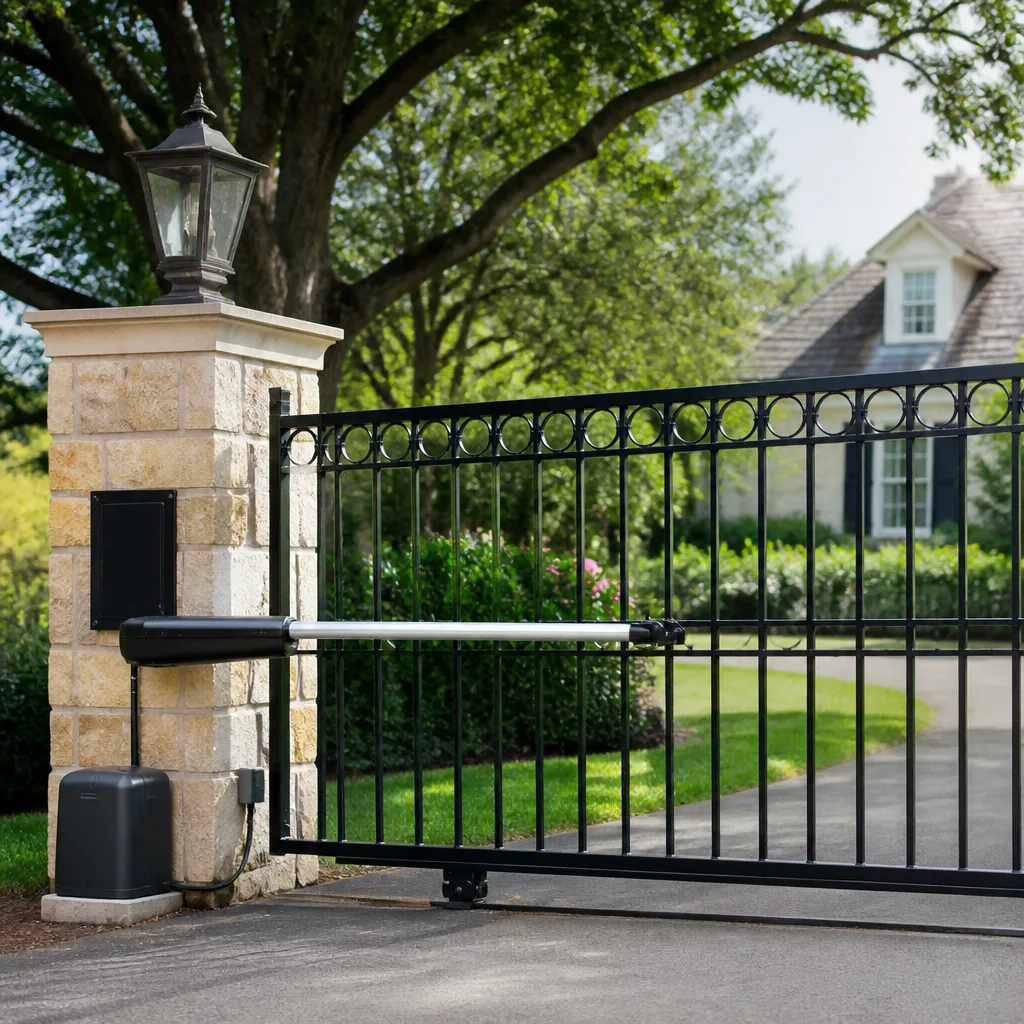
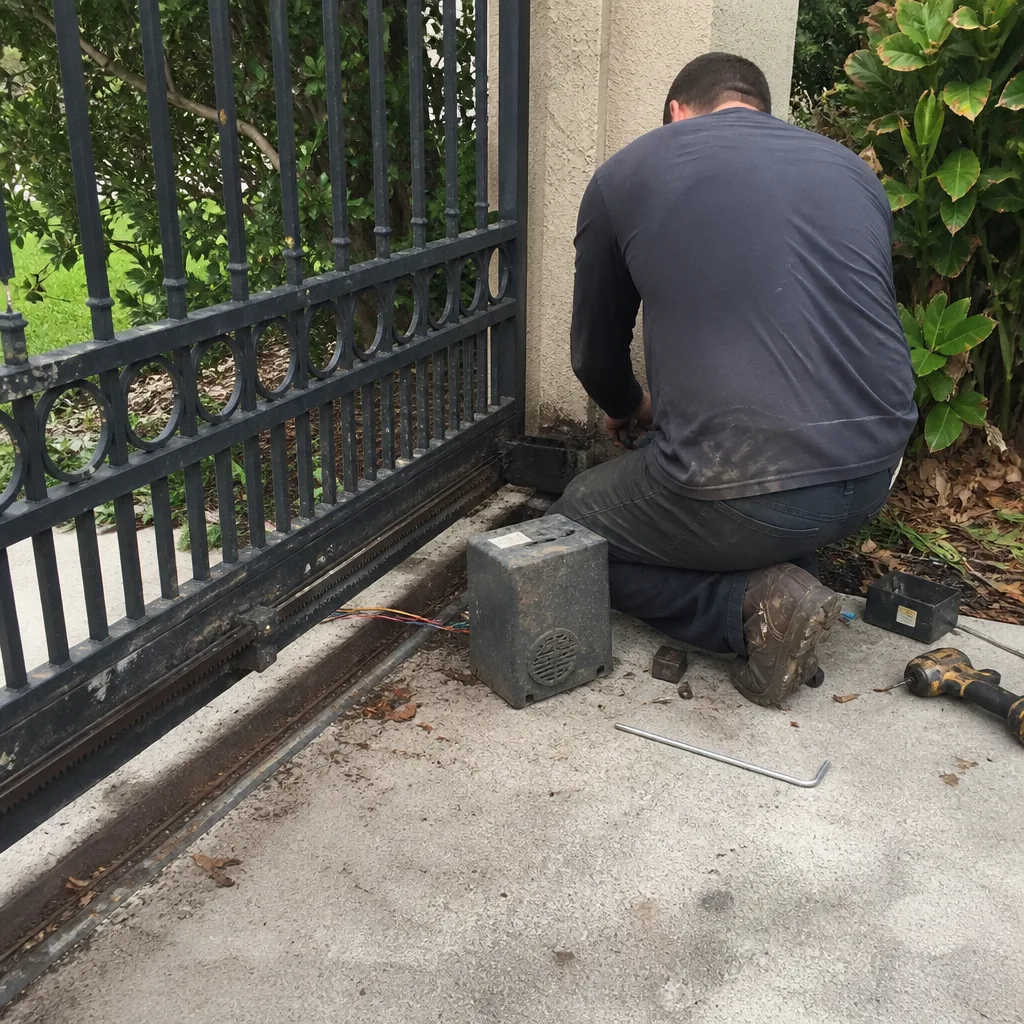 Before
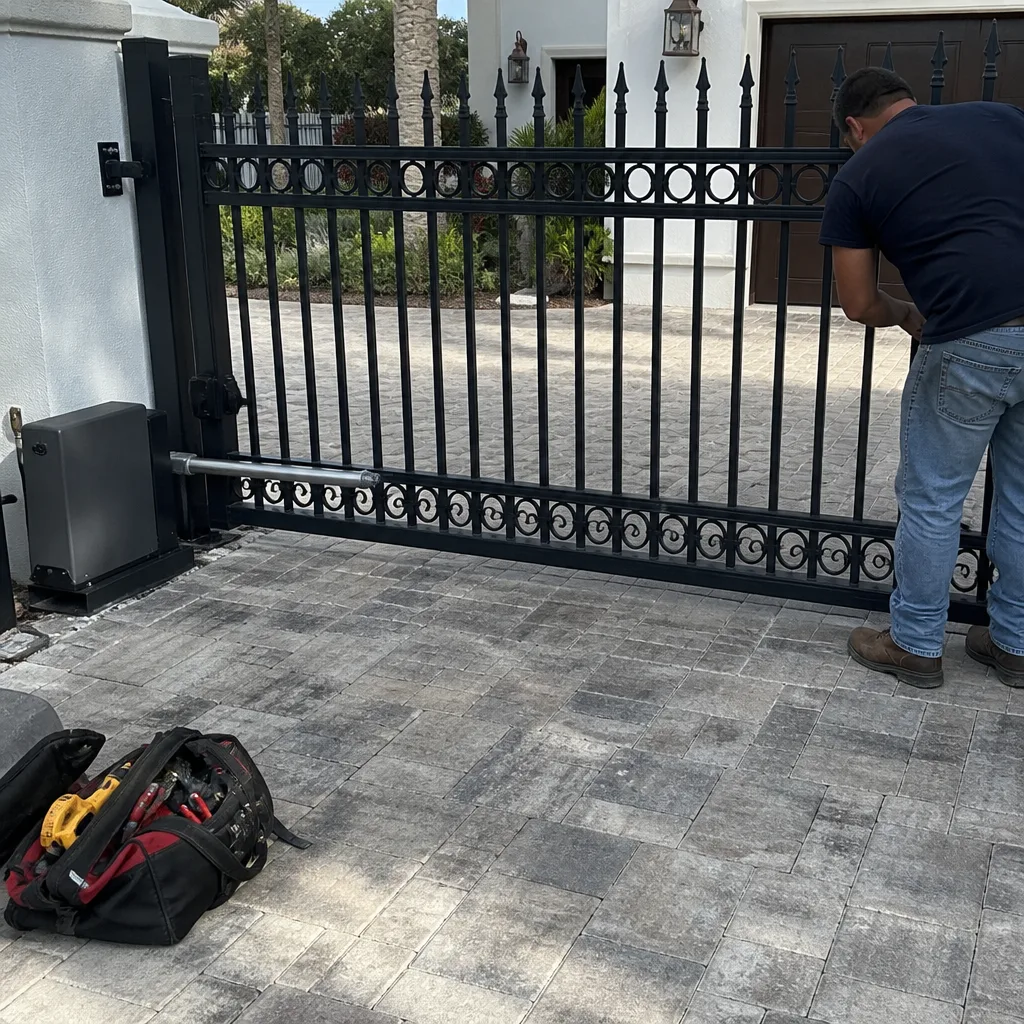 After
After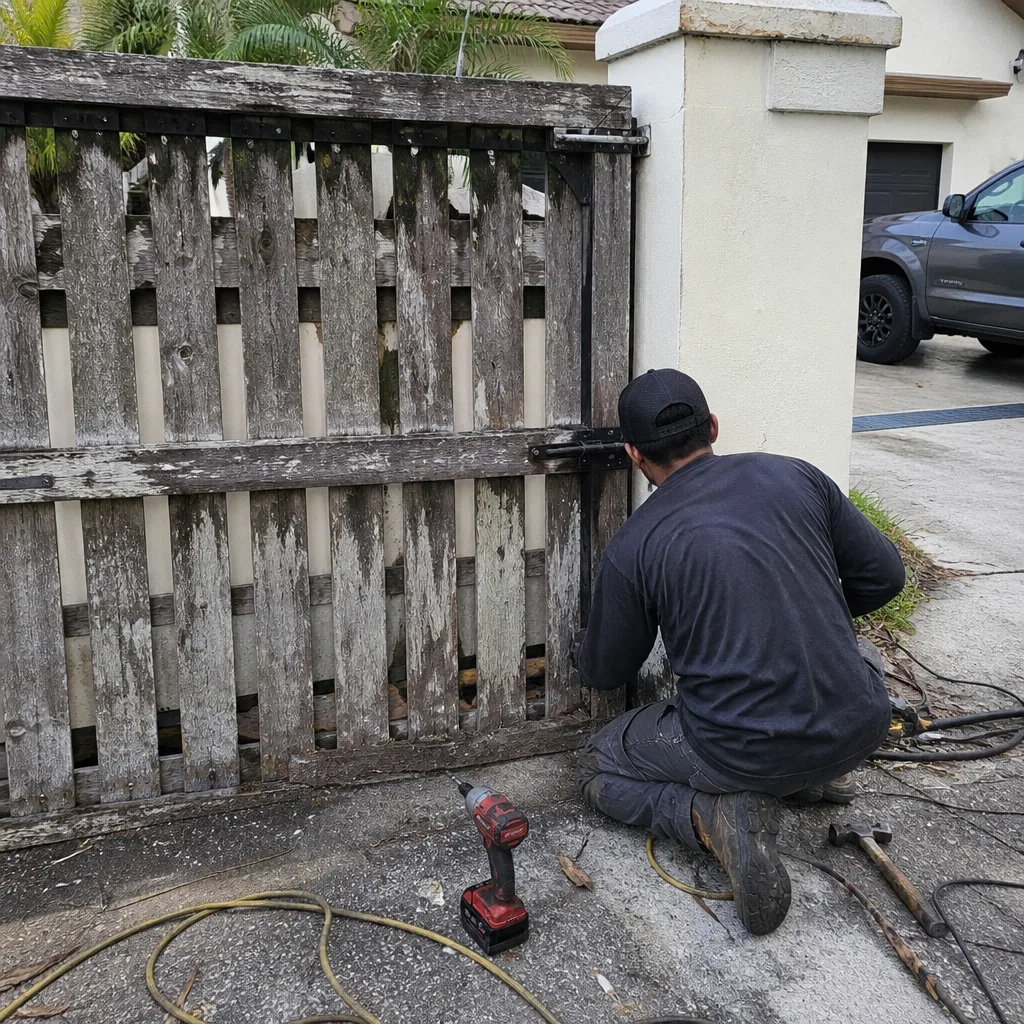 Before
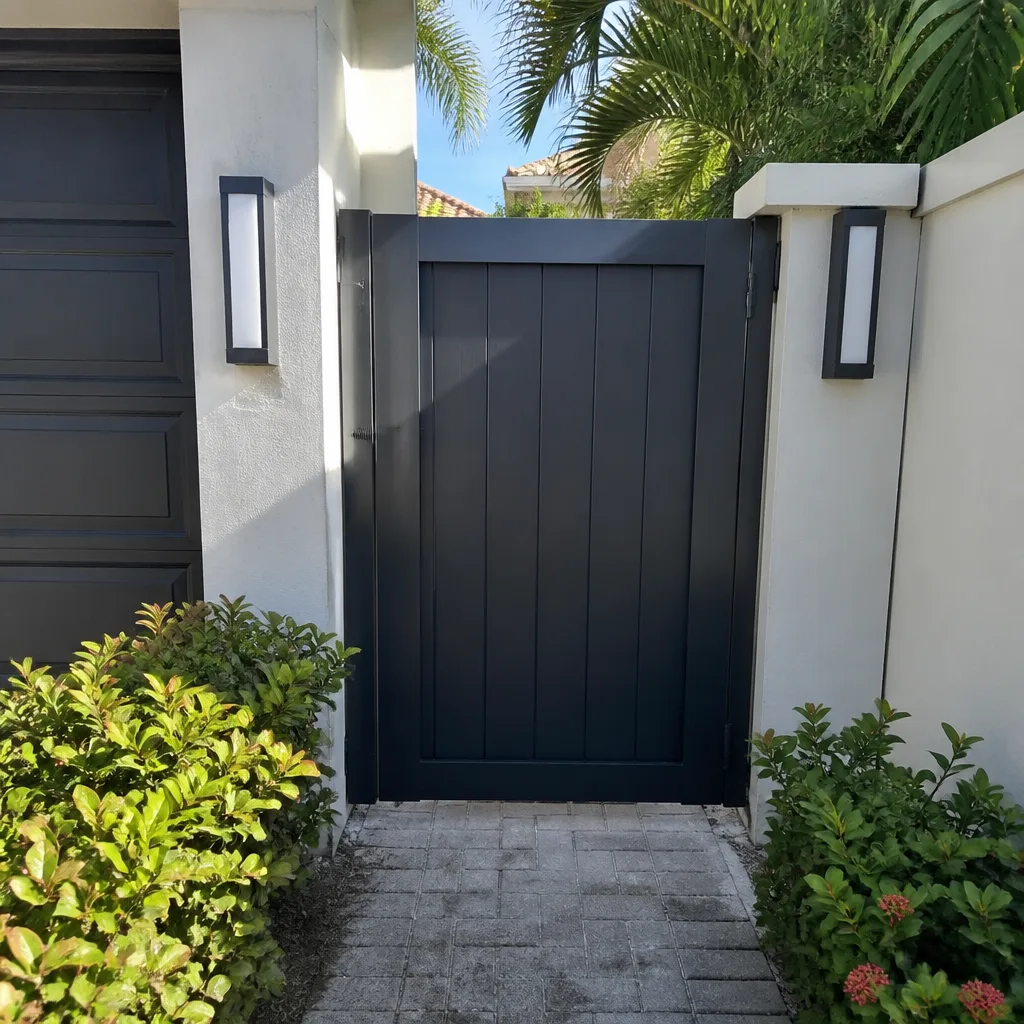 After
After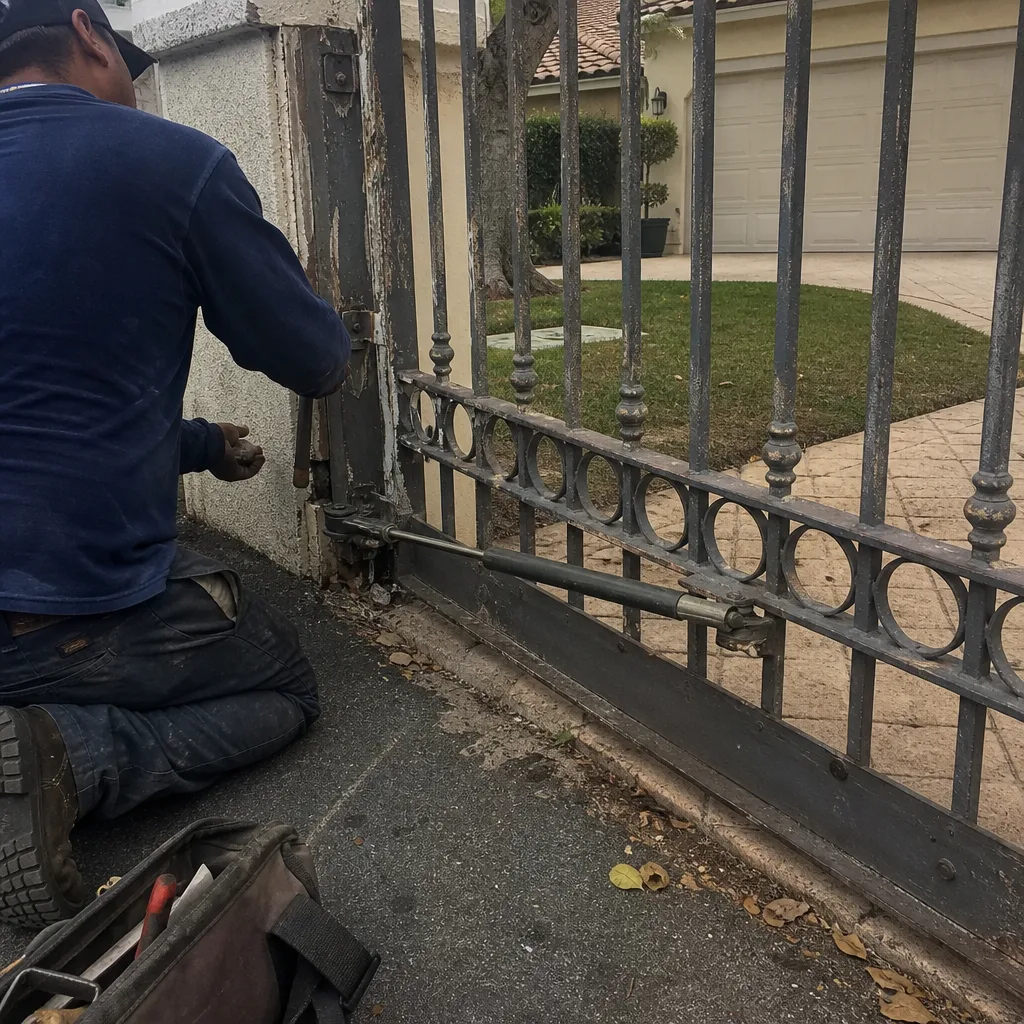 Before
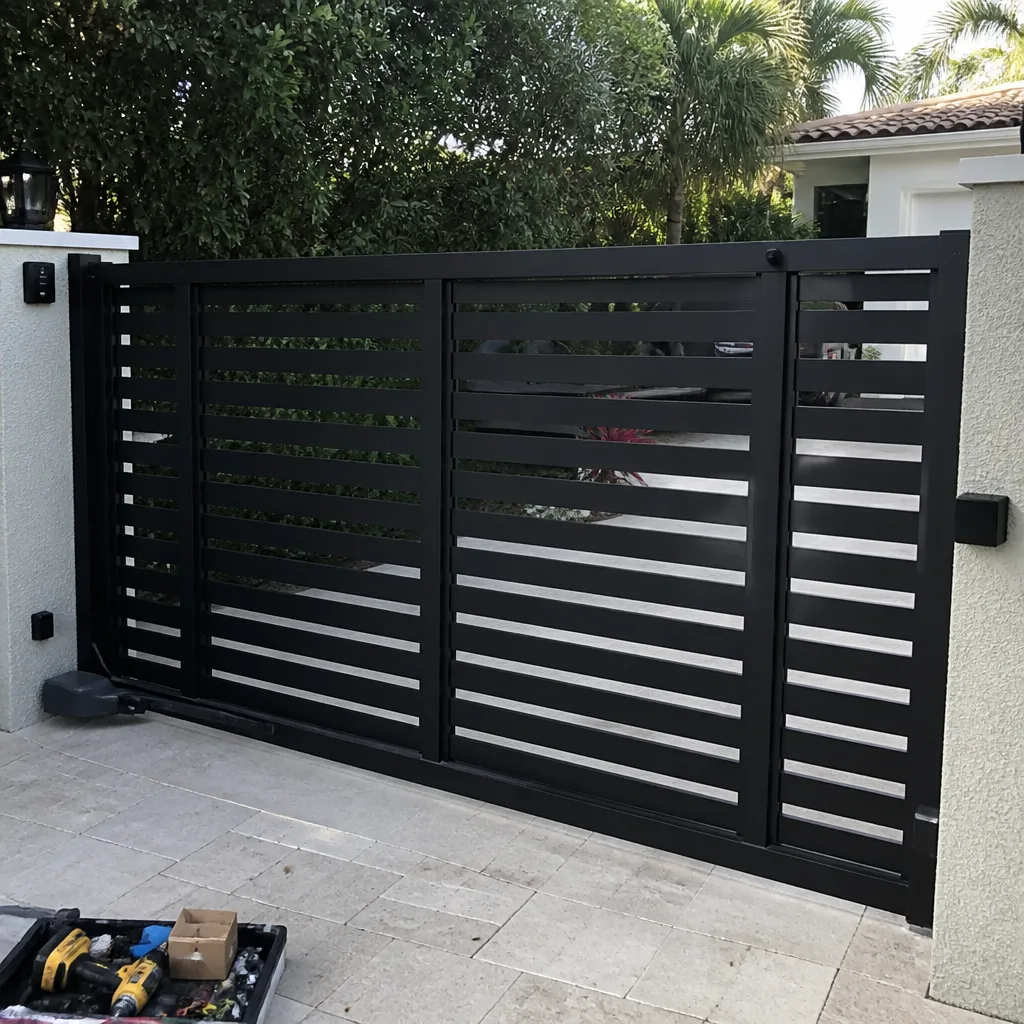 After
AfterGate Repair Permits, Codes & Inspections in FL: What You Need to Know
A gate motor swap sounds like a simple repair. In Palm Beach County, it can require a permit, an inspection, and a UL 325 safety certification. And the homeowner is the one liable if it wasn’t pulled. Most people don’t discover this until the title company asks for the paperwork during a sale. That’s the day a $900 motor replacement becomes a $3,000 retroactive permitting problem. This guide-along with our Gate Repair Warning Signs: A Boca Raton Homeowner’s Reference Guide-explains exactly where the line is drawn between a maintenance repair and a permitted alteration in Florida, with specific attention to Boca Raton, Palm Beach County, and the UL 325 entrapment standards that govern every automated gate on a residential property.
Quick Answer
In Florida, most gate repairs (spring replacement, hinge work, welding a cracked post, adjusting a limit switch) do not require a permit. But replacing a gate motor or opener, installing a new automated gate, or making structural modifications to the gate frame or supporting columns generally does require a permit and a follow-up inspection in Palm Beach County and Boca Raton municipal jurisdiction. All automated gates must also comply with UL 325 entrapment-protection standards, and the property owner is legally responsible for that compliance whether or not a permit was pulled.
Table of Contents
- Florida Permit Basics: What the State Requires
- Palm Beach County vs. Boca Raton: Two Layers of Jurisdiction
- UL 325 Explained: The Entrapment Standard That Governs Every Automated Gate
- HOA Rules: When the Governing Documents Are Stricter Than Code
- What a Permit Actually Costs vs. What a Failed Inspection Costs
- How to Get a Certificate of Completion and Where to Store It
- The Resale Trap: Title Companies, Insurance, and Unpermitted Gate Work
- Common Mistakes to Avoid
- When to Call a Professional
- Frequently Asked Questions
BeforeAfterFlorida Permit Basics: What the State Requires
Florida does not have a single statewide gate permit requirement. What it has is a statewide building code, the Florida Building Code (FBC), that local jurisdictions enforce through their own permitting departments. Chapter 1 of the FBC gives counties and municipalities the authority to require permits for any work that involves “the installation, repair, replacement, or alteration of any building, structure, or mechanical system.” Gate automation falls under the mechanical designation. Gate structure falls under building.
So the practical question in Boca Raton is not “does Florida require a permit for this?” It’s “does Palm Beach County or the City of Boca Raton require a permit for this, and under which section?” The answer depends on three questions a homeowner or contractor should be able to answer in thirty seconds:
- Is the gate motor being replaced, not just repaired? Swapping a Motor A for Motor B is a mechanical alteration. Adjusting the limit switch on the existing motor is a repair.
- Is the gate structure changing? Adding a welded steel frame extension, changing the gate from a swing to a slide configuration, or replacing both gate posts is structural work. Replacing a hinge bracket is not.
- Was the gate already automated? Converting a manual gate to an automated gate is a new installation, not a repair. The permit path is the same as a new automated gate build.
We see the confusion most often with motor swaps. Homeowners call it a repair because the gate still looks the same and the concrete work isn’t changing. Code enforcement sees it differently. In Palm Beach County, the permit application for a gate motor replacement is classified under Section 105 of the Florida Building Code as a mechanical permit. The form is short. The inspection that follows is not optional.
If you’re in Boca Raton’s city limits, the city’s Building Department processes gate permits directly rather than routing everything through the county. That means two different fee schedules, two different inspection windows, and two different sets of paperwork for properties that sit a half-mile apart. More on that below.
Palm Beach County vs. Boca Raton: Two Layers of Jurisdiction
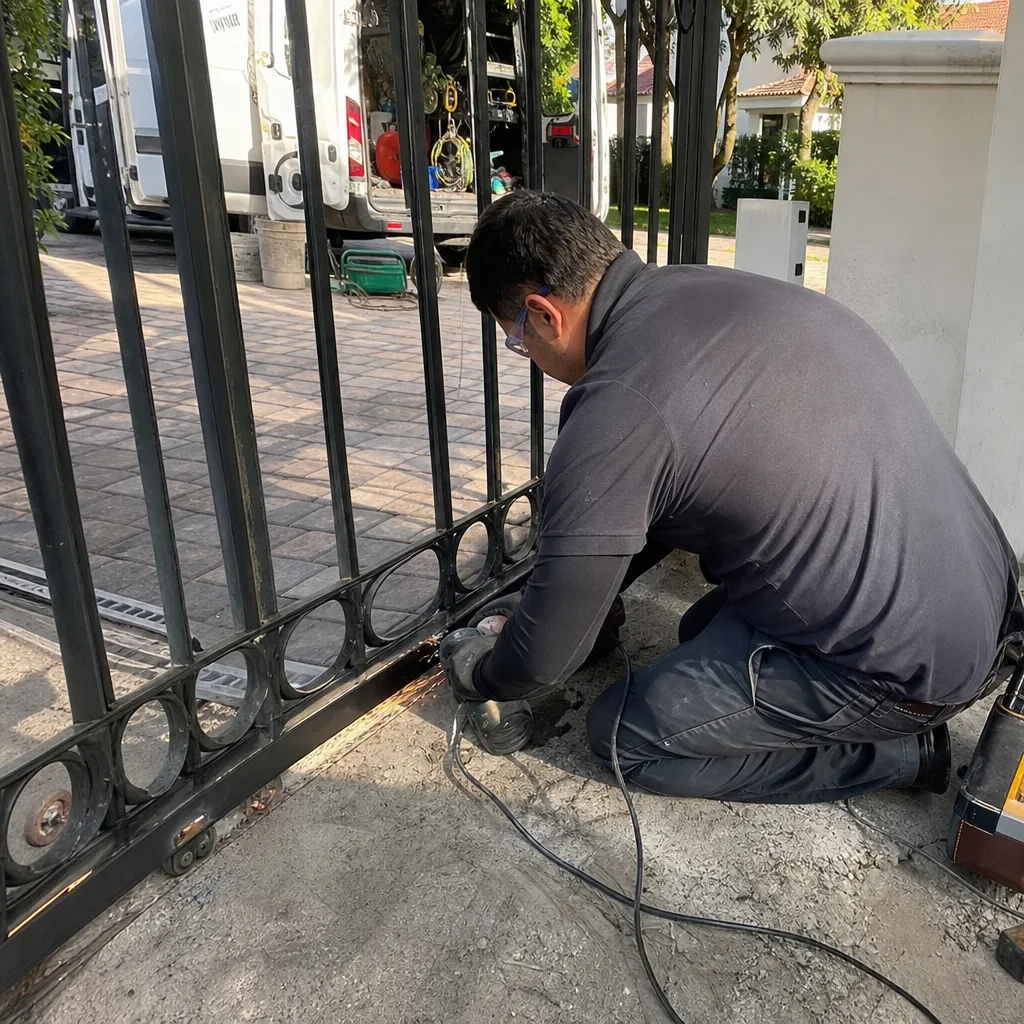
This is the part most online guides skip. Palm Beach County has unincorporated areas where county permits apply. Boca Raton is an incorporated municipality with its own Building Department and its own amendment to the Florida Building Code. A house in unincorporated West Boca falls under county jurisdiction. A house three streets east, inside city limits, falls under the City of Boca Raton. The gate work might be identical. The permitting path is not.
Here’s what changes between the two:
- Permit application portal. Palm Beach County uses its online ePermits system for unincorporated areas. Boca Raton uses its own Citizen Self Service portal. Forms, fee calculations, and inspection scheduling happen in different systems.
- Inspection timing. Both jurisdictions typically schedule inspections within one to three business days, but inspection backlogs vary with season. Winter and spring (peak construction season in South Florida) run slower than summer and fall.
- Plan review requirements. A simple motor replacement usually sails through as a “minor mechanical” permit in both jurisdictions. A new automated gate with a concrete foundation and electrical run may require a site plan showing the gate location, setback distances, and the swing arc of the gate leaf in relation to the sidewalk or street.
- Electrical work scope. If the gate motor needs a new dedicated circuit from the panel, the electrical portion of the work requires either a licensed electrician’s signature on the permit or a separate electrical permit. Both Palm Beach County and Boca Raton enforce this. A gate company that says “we’ll just tap into the existing landscape lighting circuit” is creating a code violation and a future inspection failure.
In Boca Raton specifically, automated gates within the city’s coastal and waterfront overlay districts sometimes face additional setback and height restrictions tied to view corridors and hurricane wind-load requirements. A gate that’s code-compliant in unincorporated Palm Beach County might need a wind-load calculation in Boca Raton if it’s within a wind-borne debris region, which most of the city is. That calculation is typically done by the gate manufacturer and attached to the permit application.
We’ve worked on automated gates in Boca Raton where the difference between a smooth permit and a rejected application came down to whether the manufacturer’s wind-load table was included with the submittal. It’s a one-page document. Missing it adds a week.
UL 325 Explained: The Entrapment Standard That Governs Every Automated Gate
UL 325 is a safety standard published by Underwriters Laboratories that sets the requirements for automatic gate operators and garage door openers, specifically around entrapment protection. Every automated gate operator installed in the United States must be listed as compliant with UL 325. That listing is not a Florida-specific rule. It’s a national standard that the Florida Building Code incorporates by reference. So when a Palm Beach County inspector checks a gate installation, UL 325 compliance is part of what they’re checking.
The standard requires automated gates to include external entrapment protection devices. For swing gates, that typically means:
- Photo-eyes (also called photo-cells or non-contact sensors) mounted on both sides of the gate opening. These are the infrared beams that detect an obstruction in the gate’s path and stop or reverse the gate.
- Contact edges (also called edge sensors or safety edges) mounted on the gate leaf itself. These are pressure-sensitive strips that reverse the gate when they make contact with an object.
- Audio or visual alarms that activate when the gate is in motion, required on some operator types depending on the installation class.
UL 325 also classifies gate operators by usage category. Residential gates fall under Class I or Class II. A Class I operator is for a single-family home. A Class II operator is for a multi-family community, commercial property, or any location where the general public can access the gate. The entrapment protection requirements are stricter for Class II and above because the user is not familiar with the gate’s operation. A homeowner in Boca Raton with a manual gate converted to automation gets a Class I installation. A gated community entrance gate is Class II or higher.
Here’s the part most homeowners don’t hear until it’s a problem: UL 325 compliance is not a one-time event. Photo-eyes drift out of alignment. Safety edges crack in the Florida sun. A gate that was compliant when installed in 2018 may not be compliant in 2026 because the edge sensor failed and nobody replaced it. The entrapment hazard is real, and the liability passes to the property owner. When a child or a pet is injured by a gate that lacked working entrapment protection, the plaintiff’s attorney does not sue the gate manufacturer. They sue the homeowner.
We service BFT, Linear, and Ghost Controls operators, and the UL 325 compliance requirements are identical across brands. BFT operators, common on higher-end Boca Raton properties, ship with built-in obstruction detection but still require external photo-eyes or contact edges for full compliance. Linear operators are workhorses on mid-range residential swing gates and the photo-eye mounting hardware is usually the first thing to corrode in coastal air. Ghost Controls, popular on DIY kits, still requires the same external entrapment devices when installed in Florida, and those devices must be present and functional during the inspection.
HOA Rules: When the Governing Documents Are Stricter Than Code
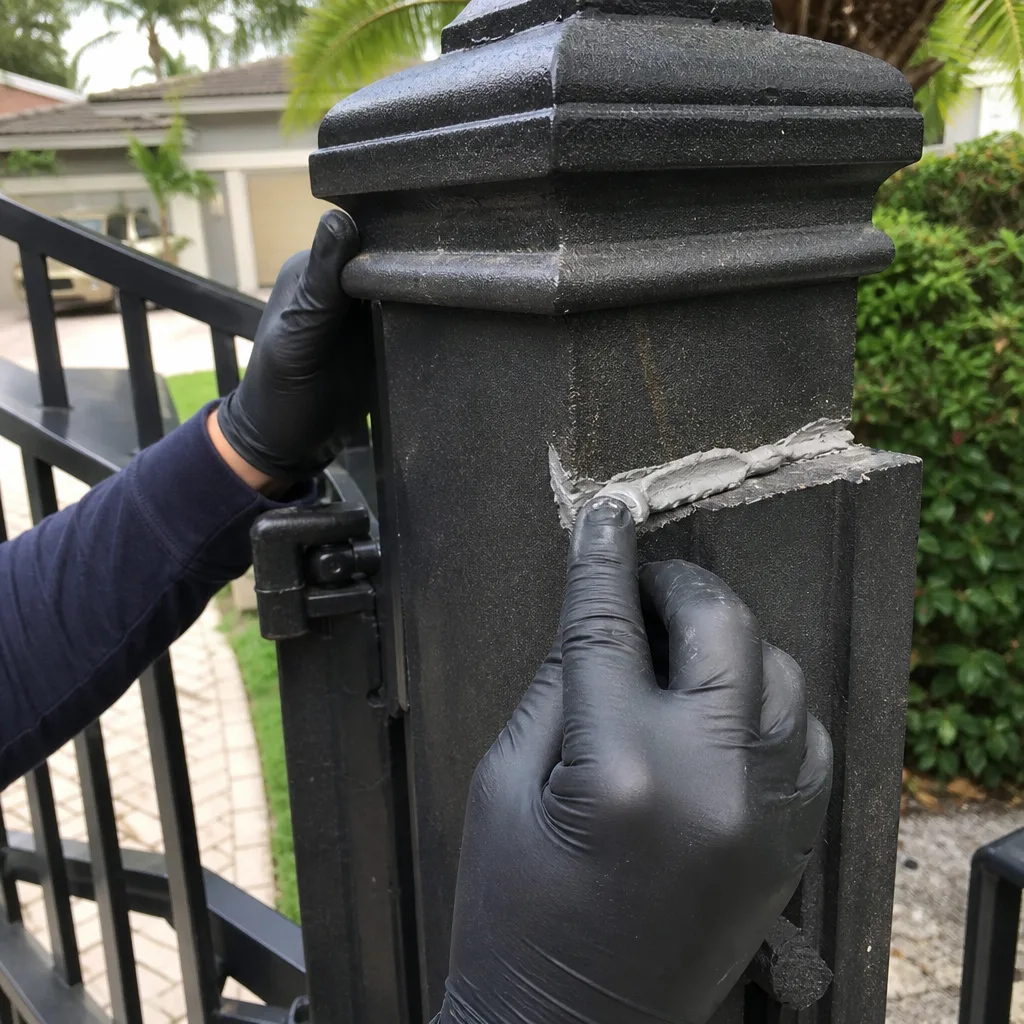
Florida has more homeowners associations than any state in the country, and Boca Raton has one of the highest concentrations in Palm Beach County. HOA governing documents for gated communities and single-family subdivisions often include architectural review requirements for gates that exceed county code. When HOA standards conflict with county code, the stricter standard controls. You comply with both. Compliance with one does not excuse non-compliance with the other.
An HOA may require:
- Architectural review committee (ARC) approval before any visible gate change, including motor replacement if the operator housing changes the gate’s appearance. The review timeline in some Boca Raton HOAs is 30 to 45 days. That’s longer than the permit review.
- Specific gate materials and colors. A wrought-iron-style gate on a property where the HOA’s design standards specify aluminum with a dark bronze finish can be denied even if the county would approve it.
- Height, opacity, and setback limits that differ from county code. Some communities cap residential driveway gates at six feet where county code allows seven. The HOA wins.
- Common-area gate standards. For gated communities, the entrance gate operators are typically Class II or Class III UL 325 installations, and the HOA’s maintenance obligations may require annual safety testing with documentation. That documentation matters if there’s ever an incident.
The practical sequence for a homeowner in a Boca Raton HOA is: HOA approval first, county or city permit second, work third, inspection fourth. Skipping step one means you might install a compliant gate that the HOA then requires you to modify or remove. We’ve seen that exact situation on a new gate installation in Boca Raton where the county inspection passed and the HOA follow-up letter arrived two weeks later demanding a finish change. The rework cost more than the original permit.
What a Permit Actually Costs vs. What a Failed Inspection Costs
A permit is not the expensive part of a gate project. In Palm Beach County, a residential mechanical permit for a gate motor replacement typically runs between $85 and $250 depending on the project valuation. Boca Raton’s city fee schedule is in a similar range, with some project types adding a small inspection fee on top. The permit costs less than the motor.
What costs money is a failed inspection and the rework that follows. Here’s what that sequence looks like in practice:
- First inspection fails. The inspector finds missing photo-eyes, a non-compliant electrical connection, or an operator that doesn’t carry a UL 325 listing. The inspector issues a correction notice with a re-inspection fee.
- Re-inspection fee. Both Palm Beach County and Boca Raton charge a re-inspection fee, typically $75 to $150 per visit, depending on jurisdiction and inspection type.
- Rework. The gate company has to come back, add the missing components, fix the electrical, or replace the non-compliant operator. That’s a second service call, often billable unless the original contractor covers it under warranty.
- Second inspection. If it passes, the permit closes. If it doesn’t, the cycle repeats.
A permit pulled correctly before work starts costs under $300 and one inspection visit. A failed inspection sequence commonly adds $500 to $1,500 in re-inspection fees, rework labor, and parts. And that assumes the original contractor is still responsive. In our experience, the homeowners who end up calling us for Gate Repair services after a failed inspection are usually the ones whose original gate company has stopped answering the phone.
There’s also the cost of not pulling a permit at all, which doesn’t show up until the property changes hands. We cover that below under the resale section. For now, the rule is simple: the permit is the cheapest line item in the whole project. Skipping it doesn’t save money. It defers the cost with interest.
How to Get a Certificate of Completion and Where to Store It
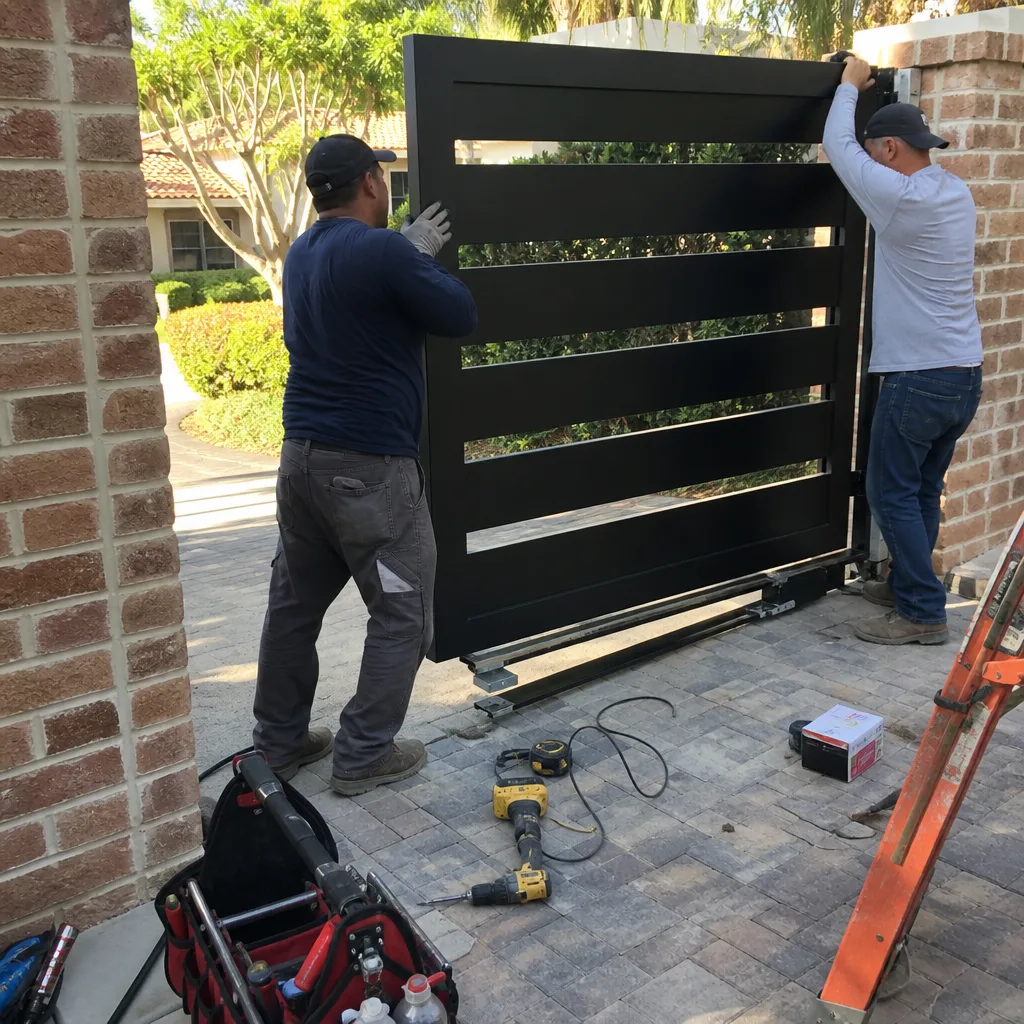
When a gate permit passes its final inspection, the building department closes the permit and the record becomes part of the property’s permitting history. What the homeowner should walk away with is a certificate of completion, sometimes called a certificate of occupancy for larger projects or simply a closed permit confirmation. Here’s the process for getting it in Palm Beach County and Boca Raton:
- After the final inspection passes, the inspector marks the permit as approved in the jurisdiction’s permitting system. This happens the same day in most cases.
- Request a copy of the closed permit or certificate of completion. In Palm Beach County, this is available through the ePermits system under the permit number. In Boca Raton, it’s available through the Citizen Self Service portal. The gate contractor should also provide a copy as part of the job documentation.
- Confirm the permit number is listed on the final documentation. A closed permit without a number is not verifiable. The number is what a title company searches by.
- Store the certificate with the property records. The title company will look for it during a sale. The buyer’s insurance company may ask for it. The HOA may request it for their architectural files.
Where to store it: keep a physical copy in the house file with the deed and closing documents, and keep a digital copy in a folder that will survive a hard drive failure. Cloud storage, a county-registered document service, or even a PDF emailed to yourself. The point is that you should be able to produce this document ten years after the work was done without digging through a contractor’s old job files. In our experience, contractors’ records from a decade ago are often gone. Yours shouldn’t be.
We leave a documented photo record on every job, including gate motor work. What was found, what was set, what was installed. That record is not a substitute for a certificate of completion, but it supports the permit file and gives any future technician the information they need without undoing finished work to re-discover it. If you’re replacing a gate motor or opener in Boca Raton, ask your contractor whether the completed permit documentation is included in your job file. If the answer is unclear, that’s a signal.
The Resale Trap: Title Companies, Insurance, and Unpermitted Gate Work
Florida title companies run a permit search as part of the standard title commitment. If the property was improved with an automated gate and no permit exists for that improvement, the title company flags it. This is where an unpermitted gate becomes a sale problem.
Here’s the sequence that repeats itself in Boca Raton and across Palm Beach County:
- The seller lists the house. The listing includes the automated gate as an improvement. No one thinks about the permit from eight years ago.
- The buyer’s title search finds the absence of a permit. Or finds a permit that was pulled but never closed. Both read as a problem.
- The title company issues a requirements letter. The seller must either produce a certificate of completion from a retroactive permit or escrow funds at closing to cover the cost of bringing the gate into compliance.
- The homeowner applies for a retroactive permit. In Palm Beach County and Boca Raton, retroactive permits are possible but trigger a full inspection. If the gate doesn’t meet current UL 325 entrapment-protection requirements, the homeowner pays for the retrofit before the permit can close.
- The sale timeline extends. Retroactive permitting can take four to eight weeks depending on inspection backlog and required corrections. Deals have died over this.
Insurance is a parallel problem. If a gate-related injury or property damage claim arises and the gate was never permitted or does not meet UL 325, the insurance carrier may deny coverage on the grounds of an unpermitted alteration. The homeowner’s liability exposure is uninsured exposure. That’s the invisible cost that’s never on the gate invoice.
The fix is unglamorous: pull the permit before the work is done, close it after the inspection, and keep the paperwork. The alternative is discovering the problem at the worst possible time, in front of a buyer’s title attorney.
Common Mistakes to Avoid
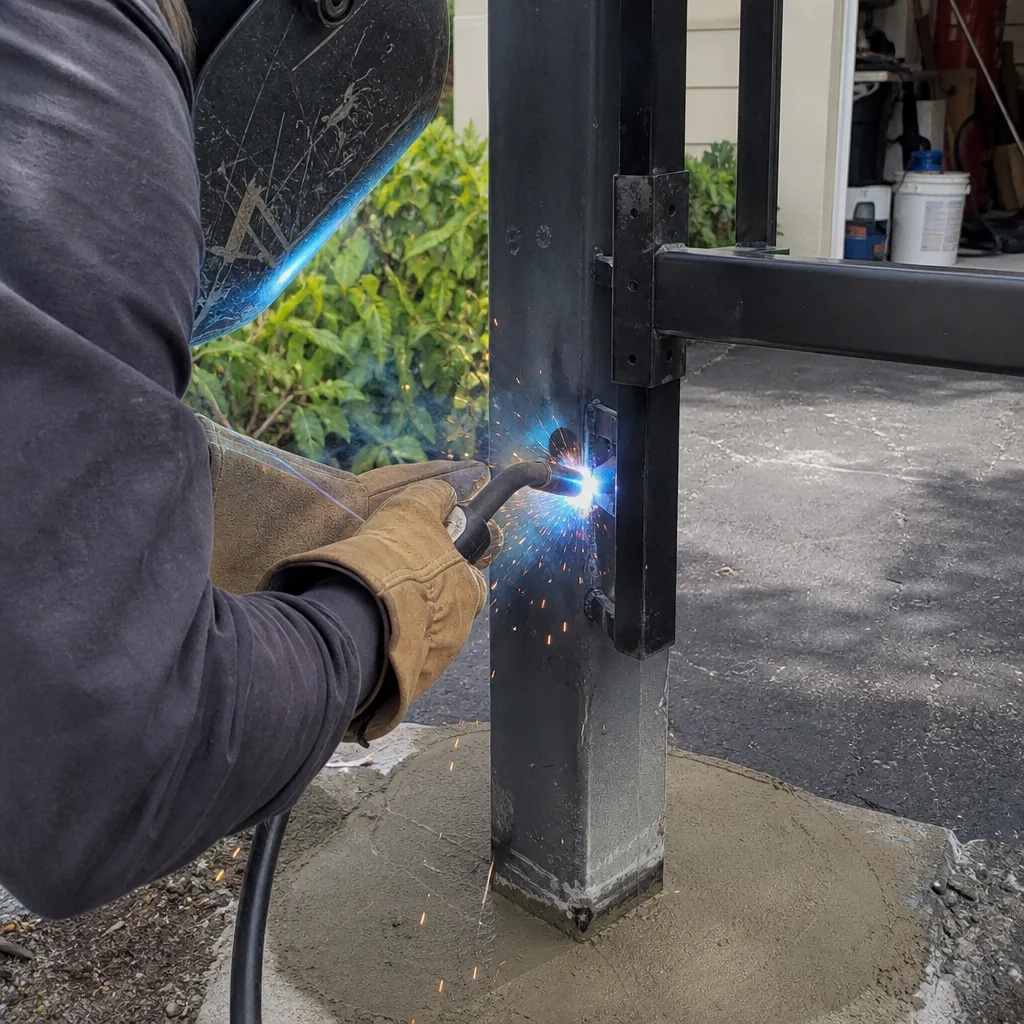
- Treating a motor replacement as a maintenance repair. In Palm Beach County and Boca Raton, replacing the operator is a mechanical alteration that requires a permit. Rebuilding the existing operator may not. Know which one you’re getting before the work starts.
- Skipping the HOA review because the county permit was approved. County approval does not override HOA architectural standards. The two processes run parallel. Missing the HOA step is how compliant gates get ripped out.
- Letting the gate contractor handle the electrical without verifying credentials. A new dedicated circuit for an automated gate requires an electrical permit or a licensed electrician’s sign-off. A gate company splicing into an existing circuit without that sign-off is creating a code violation that will surface at inspection or at sale.
- Assuming a new gate is UL 325 compliant because the motor is. The operator listing is one component. The external entrapment protection devices, specifically the photo-eyes and safety edges, must be present, functional, and correctly positioned. We regularly see new gates with a compliant operator and zero entrapment protection installed.
- Not requesting a certificate of completion after the final inspection. The closed permit is the document that matters. If you don’t request a copy and store it, you’re depending on the contractor’s records surviving the next decade.
- Ignoring photo-eye misalignment as a minor issue. A photo-eye that’s drifted 12 degrees out of alignment can fail to detect an obstruction in the gate’s path. It’s a UL 325 violation and an entrapment hazard, even though the gate still opens and closes normally.
- Letting a handyman install the gate operator. Florida requires licensed contractors for mechanical gate work in most jurisdictions. A handyman quote that undercuts the licensed bid by 30% often doesn’t include the permit, the inspection, or the UL 325 compliance. Those costs land on the homeowner later.
When to Call a Professional
You should call a licensed gate contractor before the work starts if the job involves replacing a motor or operator, converting a manual gate to automated operation, modifying the gate structure or posts, running new electrical to the gate location, or addressing a failed inspection from a previous contractor. In each of those situations, the permit path and the UL 325 compliance requirements are specific enough that guessing costs more than hiring someone who does this daily. For help choosing the right professional, see our How to Hire a Gate Repair Contractor in Boca Raton: A Step-by-Step Guide.
Vance Gate Repair Boca Raton offers free estimates in Boca Raton for gate repair, motor replacement, and gate installation projects. The written price covers the scope before work begins, and every job includes a documented photo record of what was found and what was installed. Call (754) 666-7602 to schedule an estimate.
Frequently Asked Questions
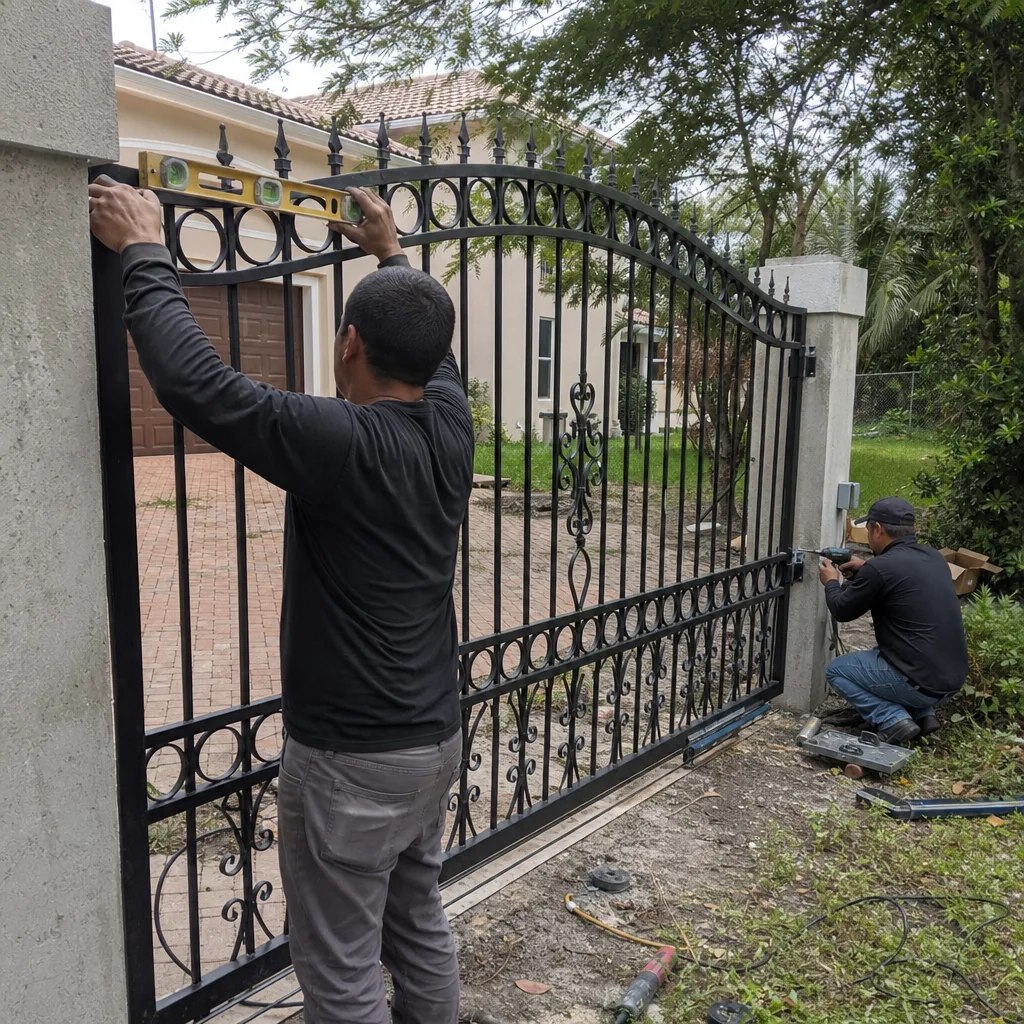
No, for most repairs. Replacing a hinge, welding a cracked frame section, adjusting the limit switch on an existing operator, or replacing a wheel on a slide gate are maintenance repairs that do not require a permit in Palm Beach County or Boca Raton under the Florida Building Code. A permit is triggered when the repair becomes a replacement, specifically when the motor, operator, or structural component is removed and swapped for a new one.
Yes, in most cases. A gate motor or operator replacement is classified as a mechanical alteration under Chapter 1 of the Florida Building Code, and both Palm Beach County (for unincorporated areas) and the City of Boca Raton (for city limits) require a permit and a final inspection for this work. The permit is typically categorized as a minor mechanical permit and costs between $85 and $250 depending on project valuation. If your gate company tells you no permit is needed for a motor swap, ask them to put that in writing.
UL 325 is the national safety standard for automatic gate operators that requires external entrapment protection devices like photo-eyes and contact edges to prevent the gate from crushing or pinning people, pets, or vehicles. The Florida Building Code incorporates UL 325 by reference, meaning a gate that doesn’t meet the standard is not code-compliant in Palm Beach County or Boca Raton. Non-compliance creates both an entrapment hazard and a liability exposure that insurance may not cover. Homeowners are responsible for maintaining UL 325 compliance on their gates.
Yes, frequently. A failed inspection triggers a re-inspection fee ($75 to $150 in most local jurisdictions), plus the cost of rework labor and parts to fix whatever the inspector flagged, plus the cost of the second inspection visit. A job that could have been completed with one permit and one inspection commonly becomes a $500 to $1,500 additional cost when the permit wasn’t pulled correctly or the UL 325 compliance wasn’t addressed before the first inspection. Call (754) 666-7602 if you’re facing a re-inspection and want a second set of eyes on the correction list.
The title company’s permit search will likely flag the unpermitted improvement, and the seller will either need to retroactively permit the gate and pass inspection, or escrow funds at closing to cover compliance costs. Retroactive permits in Palm Beach County and Boca Raton trigger a full inspection against current code, including UL 325 standards. If the gate lacks working entrapment protection, that work must be completed before the permit can close. The retroactive permitting timeline can run four to eight weeks, which delays or kills sales.
Yes, if the HOA’s governing documents include architectural review requirements for gates, which is common in gated communities and many single-family subdivisions in Boca Raton. HOA approval is a separate process from county or city permitting. The stricter standard controls, and an HOA can require changes to a gate that passed county inspection. The correct sequence is HOA approval first, then permit, then work, then inspection.
The Bottom Line
The line between a gate repair and a permitted gate alteration in Florida is drawn at motor replacement and structural modification. Most gate repairs need no permit. Most gate motor replacements do. Every automated gate must meet UL 325 entrapment-protection standards, and the property owner carries the liability for compliance. Pulling the permit costs under $300 and takes one inspection. Skipping it creates a liability that surfaces at resale, in an insurance claim, or in the worst case, after an entrapment injury. Keep the certificate of completion with your property records, verify HOA requirements before any visible work, and treat the permit as the cheapest line item in the project. For gate work in Boca Raton, Vance Gate Repair Boca Raton home is the starting point for a written estimate and a documented job record.
Written by Adrian Vance, Owner at Vance Gate Repair Boca Raton, serving Boca Raton since 2014. Explore more guides & resources on gate repair and maintenance.